A PLACE-BASED APPROACH
Lo—TEK Office for Intercultural Urbanism is a women-led strategic thought and design practice translating ancestral knowledge into contemporary approaches to landscapes, materials, infrastructure, and urban systems. Grounded in land, water, and ecology, our work draws on biocultural knowledge systems to develop place-based spatial strategies and material innovations that shape resilient and regenerative cities and landscapes.
Regenerative Design by Radical Indigenism

A LONG-TERM VISION
We integrate intergenerational thinking into contemporary design practice, moving beyond short-term solutions toward long-term ecological and cultural stewardship. Our approach considers how the decisions we make today can support living systems, strengthen relationships between people and place, and create enduring value for future generations.

OUR COLLECTIVE EXPERTISE
Our interdisciplinary practice brings together designers, engineers, and scientists, a majority of whom are Indigenous practitioners who bring their own ancestral knowledge and land-based expertise into contemporary practice. Our expertise spans ancestral technologies, biocultural hydrology, water systems engineering, material science, and living infrastructure. We work through intercultural collaboration and co-authorship, bringing distinct knowledge systems and technical disciplines into dialogue while respecting Indigenous knowledge sovereignty and supporting community-led approaches.
THE OFFICE
Based in New York and London, Lo—TEK Office for Intercultural Urbanism operates as an interdisciplinary design practice, partnering with governments, organizations, leading engineering, architecture, and planning practices, as well as First Nations, Indigenous, and under-served communities to address complex environmental and urban challenges.
Our team brings together Indigenous and non-Indigenous practitioners working across disciplines and geographies, guided by a majority-Indigenous Advisory Circle of knowledge holders and allies. We employ an Indigenous Knowledge Engagement Framework to ensure that community perspectives, cultural protocols, and knowledge systems meaningfully inform project strategy, design, and delivery.

Julia Watson, ASLA
Founder & Co-Director
Watson bridges Indigenous knowledge systems and contemporary design through visionary thinking, transformative education, and regenerative practice.

Dr. Charlene Smith
Science Co-Director
Smith advances bioregional green chemistry through ecological design, championing the protection of social, cultural, and environmental diversity.

Alissa Priebe
Design Co-Director
Priebe bridges landscape architecture, ecological restoration, and cultural landscape practice through collaborative, place-based design.

Dr. Lyla June Johnston
Consultant & Advisor
Johnston integrates Indigenous science and Western research to advance ecological restoration, food system renewal, and cultural resilience.
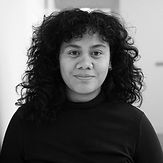
Nicole Fidow
Infrastructure Engineer Associate
Fidow advances regenerative infrastructure through ecological engineering, championing resilient systems that connect communities, landscapes, and the built environment.

Ava Xia
Design & Research Fellow
Ava centres indigenous and situated oral knowledge in her spatial research and multidisciplinary design practice to intervene in collective ecologies and resilient futures.

Liuyun Wang
Research Fellow (External)
Liuyun explores landscape resilience through Indigenous knowledge systems, watershed stewardship, and food sovereignty, advancing place-based approaches to ecological adaptation and cultural continuity.
OUR SERVICES
Our practice operates across three complementary service areas, supporting projects from early-stage research and strategic planning through collaborative design, implementation, and long-term stewardship.
01
Landscapes
We develop regenerative landscape and public realm strategies through biocultural site analysis, ecological planning, living infrastructure, and integrated water systems, establishing frameworks for long-term ecological resilience and stewardship.

03
Systems
We develop biocultural governance frameworks, climate resilience strategies, and participatory co-design processes, integrating Indigenous knowledge engagement into institutional practice, education, and policy development.

02
Materials
We research and develop place-based material systems, combining material intelligence, biomaterial innovation, circular resource flows, climate-responsive assemblies, and low-carbon fabrication to advance regenerative design.